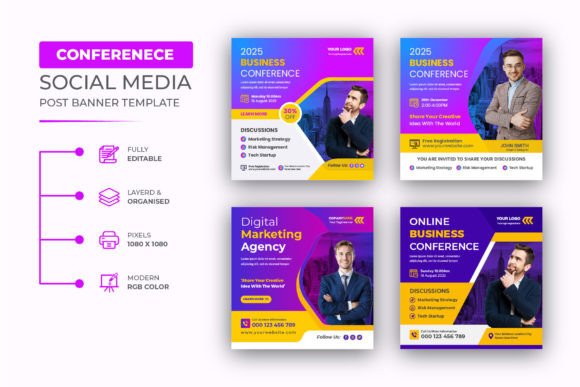
Creating a Standout Business Conference Social Media Post
You’ve secured your ticket, booked your flight, and packed your business cards. The agenda looks packed with valuable sessions and networking opportunities. But in the weeks leading up to the event, one question lingers: how do you make sure your presence is known before you even arrive? A generic "I'll be there!" post gets lost in the noise. What you need is a visual announcement that captures attention, conveys professionalism, and generates excitement. This is where a thoughtfully designed social media graphic becomes your most powerful pre-event marketing tool.
Imagine scrolling through your LinkedIn or Instagram feed. A crisp, clean, and visually cohesive post about an upcoming conference stops your thumb. It doesn't just say "Conference Alert." It tells a story through its design—the choice of imagery, the clarity of the typography, the harmonious color palette. It looks intentional, polished, and aligned with a brand that knows what it's doing. This is the difference between simply attending an event and strategically leveraging it for brand growth. A well-executed graphic acts as a digital handshake, introducing your brand's aesthetic and professionalism to your network long before you step into the venue.
The Anatomy of an Effective Event Graphic
What separates a forgettable post from one that drives engagement and builds anticipation? It boils down to a few key visual and informational components working in harmony. First, clarity of message is paramount. The core details—the event name, date, your involvement (speaker, attendee, sponsor), and a clear call-to-action—must be instantly readable. This isn't the place for overly decorative fonts that sacrifice legibility. A clean sans-serif font for key information ensures it's digestible at a glance on a small mobile screen.
Beyond the text, the overall design framework sets the tone. A professional template provides this structure. Consider a layout that balances bold headline space with a designated area for a high-quality headshot or your company logo. The color scheme should reflect your brand identity, creating an immediate visual connection for your followers. Using a template with a modern, grid-based layout can help organize information logically, guiding the viewer's eye from the most important detail (the "what") to the supporting information (the "when," "where," and "why"). This structured approach is a hallmark of effective social media graphics, ensuring your message is both beautiful and functional.
Practical Applications Beyond the Announcement
The true value of a versatile design asset like a Business Conference Social Media Post template lies in its adaptability. Its use extends far beyond a single announcement. Think of it as the foundation for an entire campaign surrounding the event. Before the conference, you can create a series of posts introducing the key sessions you're excited about or teasing the topics you'll discuss if you're a speaker. The same design system can be used to share countdowns, spotlight other attendees you hope to meet, or highlight the host city.
During the event, the template becomes your live engagement tool. Use it to create real-time posts sharing quotes from keynote speakers, photos from the exhibition floor, or snapshots of your team networking. The consistent visual branding makes all these disparate posts feel like part of a cohesive story. After the conference, the template is perfect for sharing your key takeaways, a thank-you post to new connections, or a summary of your experience. This lifecycle approach maximizes the return on your design investment, turning a single graphic into a multi-faceted content series that reinforces your brand's narrative throughout the event journey.
Design Choices That Elevate Your Brand
Every design element you choose is a subtle communication about your brand's values. The typography, for instance, plays a crucial role. Pairing a strong, authoritative sans-serif font for headlines with a more readable, friendly font for body text can create a balance of professionalism and approachability. This thoughtful font pairing is a cornerstone of modern typography and brand identity. It shows attention to detail and an understanding of visual hierarchy, making your message not only seen but also felt.
Similarly, the imagery and color palette you select are powerful brand signals. A template that allows for easy customization of these elements is invaluable. You might use a dynamic, abstract background to suggest innovation and energy, or a clean, solid color block to convey stability and trust. The ability to match these colors precisely to your brand's hex codes ensures visual consistency across all platforms, which is fundamental to building brand recognition. When your social media graphics, website, and print materials all share a unified visual language, you create a seamless and professional brand experience for your audience.
Streamlining Your Creative Workflow
For small business owners, entrepreneurs, and content creators, time is the most precious resource. The last thing you need is to start from scratch every time an event approaches. This is where the practical benefits of a ready-to-edit template truly shine. A well-structured file, such as one built in Adobe Illustrator with clearly labeled layers and guides, transforms a potentially hours-long design task into a simple, 30-minute customization process. You're not wrestling with software; you're simply swapping out placeholder text with your details, dragging in your headshot, and adjusting the color palette to match your brand.
This efficiency doesn't come at the cost of quality. A professionally designed template ensures that the foundational layout, spacing, and proportions are already optimized for visual appeal and readability. It’s like having a experienced graphic designer set up the perfect canvas for you. The included help guide can be a lifesaver for those who are less familiar with the software, providing clear instructions on how to make changes. This focus on ease of use empowers you to maintain a high standard of design across your marketing assets, even if you're not a seasoned designer. It’s about working smarter, not harder, to present your brand in the best possible light.
Making the Most of Your Investment
When you acquire a design asset, understanding its full potential and licensing is key to using it effectively and legally. A template designed for a business conference is a versatile tool that can be adapted for related purposes. Think about using the design system for internal company event announcements, webinar promotions, or even mastermind group meetups. The core principles of clear communication and professional presentation apply across these scenarios. The structure that works for a social media post can often be adapted for other marketing materials, like email headers or digital flyers, ensuring brand consistency across channels.
It's also important to consider the practicalities of the file itself. Checking the file format compatibility with your software (like Adobe Illustrator CC) and the resolution (such as 72 DPI for digital use) ensures a smooth workflow. Understanding the licensing terms—whether it's for personal use, commercial projects, or both—gives you the confidence to use the design across your business activities without concern. A well-packaged asset often includes all necessary information, from font download links to a support channel, making it a reliable part of your creative toolkit. This level of support allows you to focus on your message and your audience, knowing the technical and legal foundations are solid.